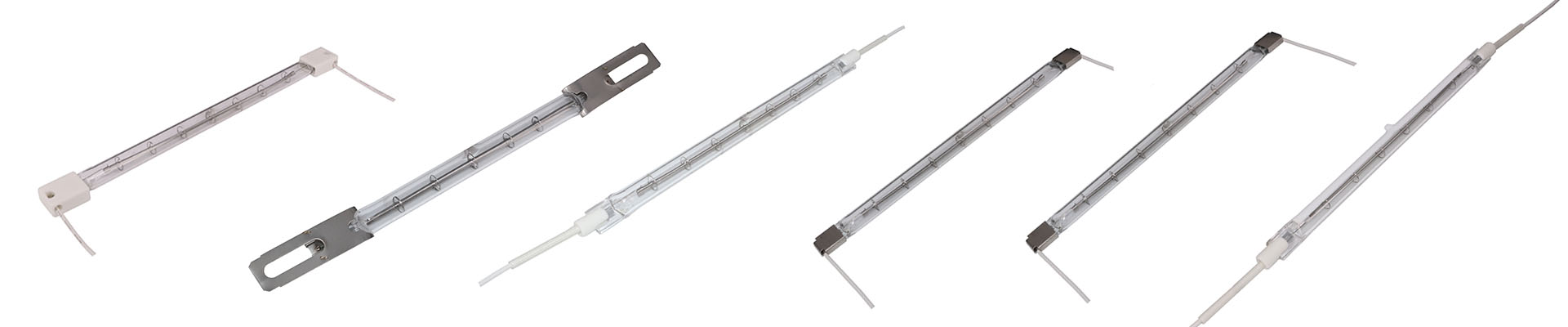
Halogen Infrared Heaters: The Real Story Behind R7s Lamps
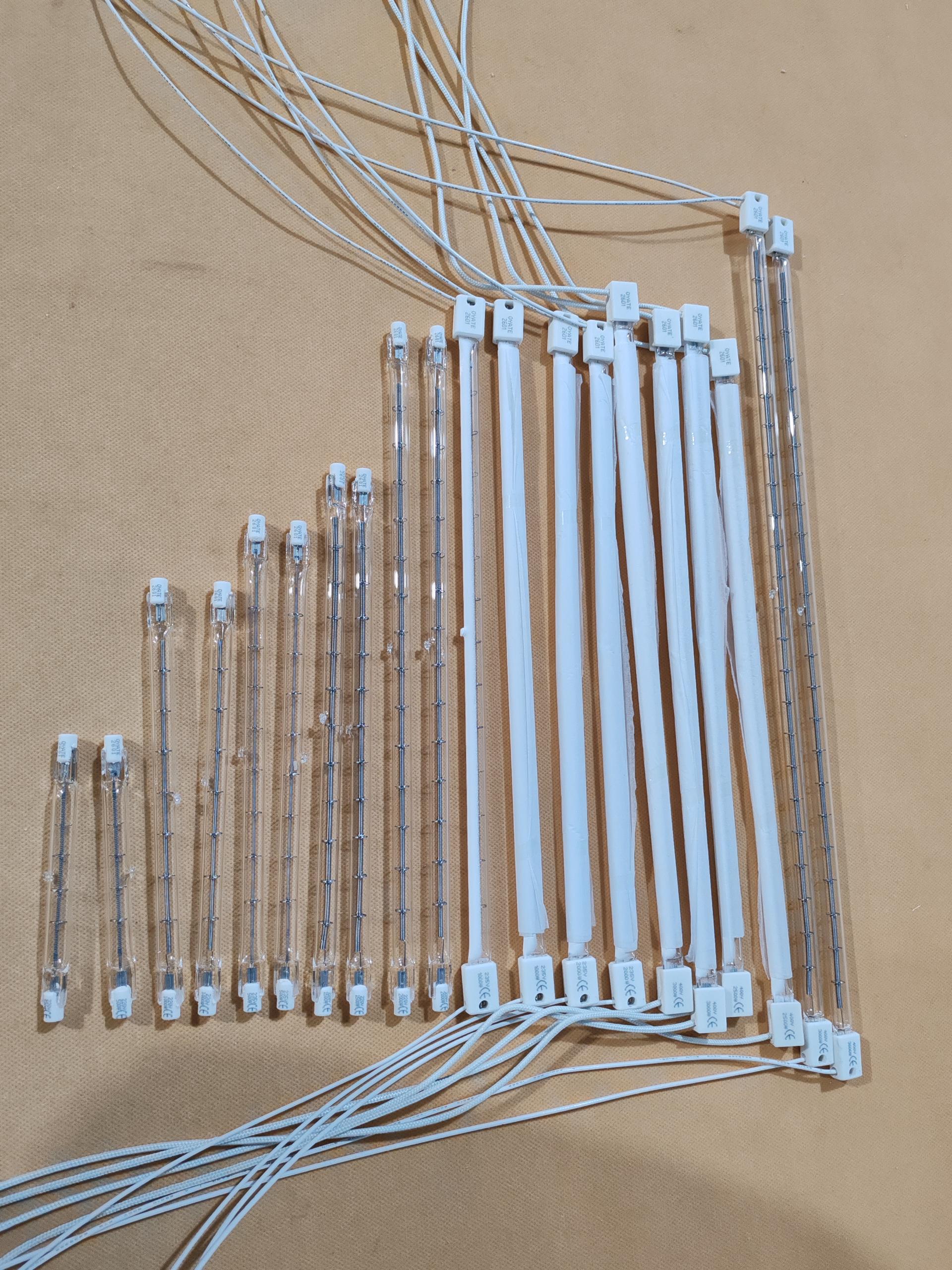
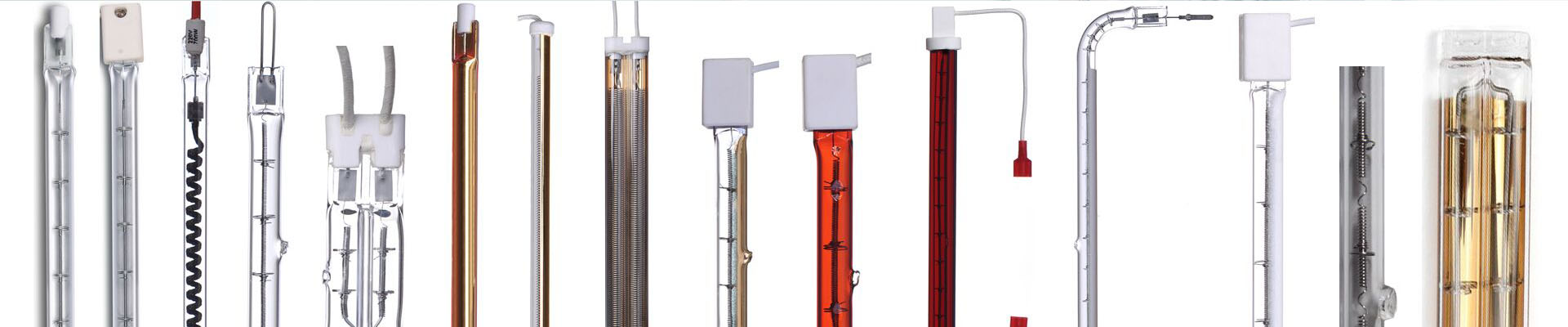
We make halogen infrared heaters for one simple reason: to blast high-intensity heat right where you need it. Forget warming up the whole room. These lamps deliver energy straight to the target, like a focused beam. The result? You get heat instantly, and the air around it stays cool. On a busy factory floor, that’s not just nice to have—it’s essential.
Power, Voltage, and Fit: Getting the Details Right
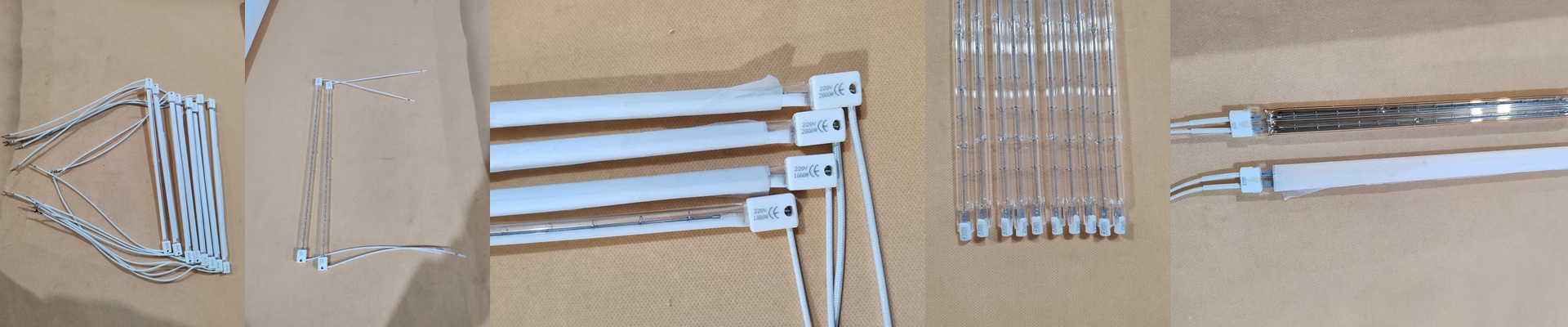
When we size up a halogen infrared lamp, we match the power and voltage to the job. A common setup might be 400V and 2500W, packing serious heat into a small space. The tube length—say, 300mm—is chosen to shape the heat pattern. Shorter tubes concentrate the heat, but they also push more wattage per inch. That means your machine’s cooling system has to be up to the task. Pushing 2500W into a 300mm space creates intense local heat. So the mount and the shielding around the lamp need to handle that stress without breaking a sweat.
Why Quartz and R7s? It’s Not a Coincidence
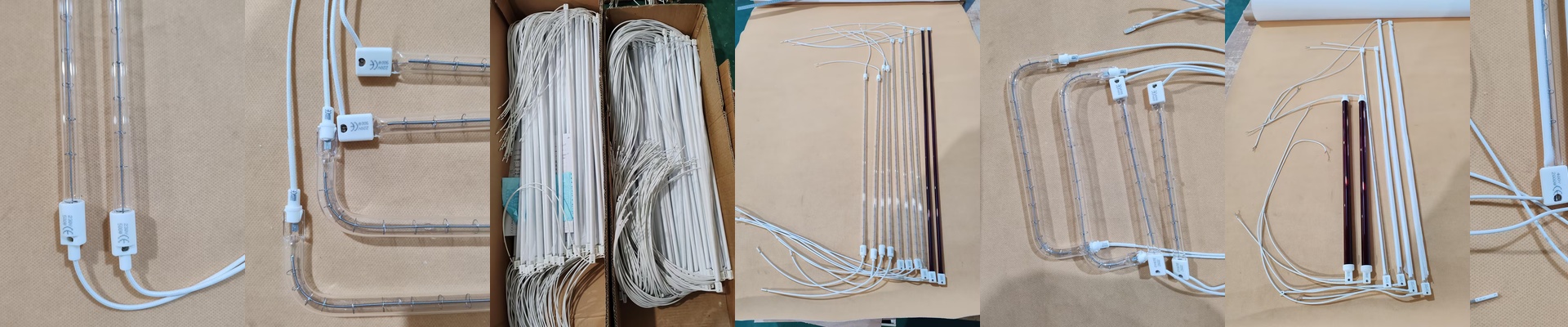
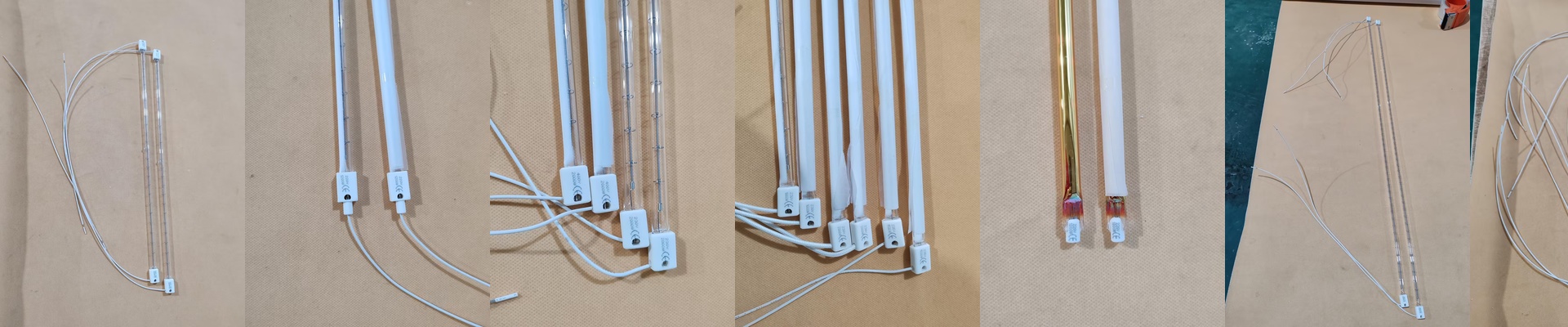
We use quartz for the envelope because it handles the searing filament temperatures and lets shortwave infrared pass through cleanly. Inside, the halogen cycle keeps the filament clean, which extends lamp life and keeps output steady. The coating on the quartz is tuned to cut the visible glare while letting the infrared through. Operators get protection from harsh light without losing the heat. The R7s connector is standard for good reason. It gives you a secure, two-point contact that can handle high current, and it makes the lamp a simple drop-in replacement in most industrial fixtures. For some setups, we use Sk15 fittings when the alignment and spacing are different. Either way, installation stays quick, and downtime stays low.
Where This Shines: Precision Heat for Tough Processes
Take PET blowing. You need heat fast, right on target, to soften the preform without turning the whole machine into an oven. A shortwave halogen infrared lamp hits the mark instantly, giving you precise temperature control and faster cycles. The same idea works for plastic welding and curing, where the heat has to penetrate the joint without warping nearby parts. These lamps are built to take a beating on the production line. They fire up the moment you flip the switch, run at full power immediately, and deliver repeatable heat patterns. The catch? Thermal management matters. High power density needs proper heat sinking and airflow around the lamp. Get the fixture specs right, and you end up with a heating solution that’s reliable, low-maintenance, and keeps your line moving.